Company News
225 Years of Driving Innovation
Crane Currency - 1801 to 2026
In a quiet corner of the Crane Museum of Papermaking in Dalton, Massachusetts, early sheets of paper from the company’s first decades are preserved behind glass. Made from linen rags, formed by hand, and dried with care, they carry the marks of a process that depended as much on human skill as on material availability. It is easy to see it as an artifact. It is harder – and more interesting – to see it as the starting point of an idea that continues to shape a global business.
Celebrating is in most cases an exercise in looking back. At Crane Currency, it becomes something else entirely. For 225 years, Crane has operated at the intersection of craftsmanship, security, and trust. From a small paper mill in Massachusetts to a global partner for central banks and governments, the company’s story is not simply one of longevity, but of adaptation and delivering value in an ever-changing world.
While technologies, markets, and threats have shifted dramatically over time, one principle has remained constant – trust must be built into what people rely on. That principle connects hand-made rag paper in 1801 with today’s advanced security features, linking centuries of craft with the demands of a digital era.
Long before the modern financial system took shape, the question was already the same. Who – or what – can be trusted to hold value?
FROM CRAFT TO SECURITY
When visiting Crane Currency’s headquarters and paper production in Dalton, Massachusetts, the sense of continuity is difficult to ignore. The Housatonic River still runs alongside the mills, just as it did when Zenas Crane established his paper business here in 1801. Inside the facilities, however, the contrast is striking. What began as a manual craft has evolved into a highly specialized industrial and technological operation, where material science, engineering, and security expertise converge.


In 1801, the ambition was clear: produce paper of the highest possible quality. The materials were humble. Linen and cotton rags, water, and skilled labor. The first mill was small, employing only a handful of workers – roughly half a dozen people – producing a few thousand sheets a day through a painstaking, manual process. Yet even then, quality was not a marketing claim but a requirement. Paper had to perform, endure, and meet expectations in ways that left little room for error. That mindset would prove decisive.
What is less widely known is how early Crane embraced mechanization. Well before large-scale industrialization reshaped manufacturing in the late 19th century, Crane was already investing in more efficient papermaking machines in the early to mid-1800s. These decisions were not about scale alone. They were about control, consistency, and quality – ensuring that each sheet met increasingly demanding standards.
THE PEOPLE BEHIND THE PROCESS
Another often overlooked part of this early story is the workforce itself. Much of the detailed work – sorting rags, preparing fibers, finishing sheets – was carried out by women. Men typically operated the central machinery, but the precision work that defined quality depended heavily on female labor. It was a division of roles that reflected the realities of the time and underscores how many hands contributed to building Crane’s early reputation.
“People often think of early papermaking as a purely manual craft,” says Jenna Ware, Museum Director at Crane Museum of Papermaking in Dalton, Massachusetts. “But Crane was investing in mechanization early. At the same time, the process still relied on a highly skilled workforce, including women, whose work in preparing rags and finishing the paper was essential to achieving consistent quality.”
A turning point came not from growth, but from observation. By the mid-19th century, Crane understood that the real threat to its customers was not supply, but trust. Counterfeiting was becoming more sophisticated, and the consequences were systemic. If currency could not be trusted, neither could its issuer.


SCALING TRUST ACROSS NATIONS
The response was both practical and visionary. As early as 1844, Crane introduced embedded threads directly into the paper, one thread for $1, two for $2, and so on. It was a deceptively simple idea with profound implications: the paper became a vehicle for security features, not just a carrier of print.
This moment marked a quiet but fundamental shift. Crane was no longer simply making paper. It was engineering trust.
Over time, this approach deepened. Watermarks, colored fibers, and increasingly sophisticated security elements were integrated into the paper. What mattered was not a single feature, but the cumulative effect of multiple, integrated features; a harbinger of modern banknote security.
By the late 19th century, these capabilities positioned Crane for a defining opportunity. In 1879, the company was selected to supply paper for U.S. banknotes. The decision followed extensive evaluation and reflected a combination of quality, consistency, and technical expertise. It also established a relationship that has endured for well over a century.

The path to that contract, however, has become part of Crane’s internal lore. Several papermakers traveled to Washington to submit their bids, aware that the requirements favored advanced security features that Crane had pioneered. According to accounts preserved over time, competition was intense and, at times, dramatic.
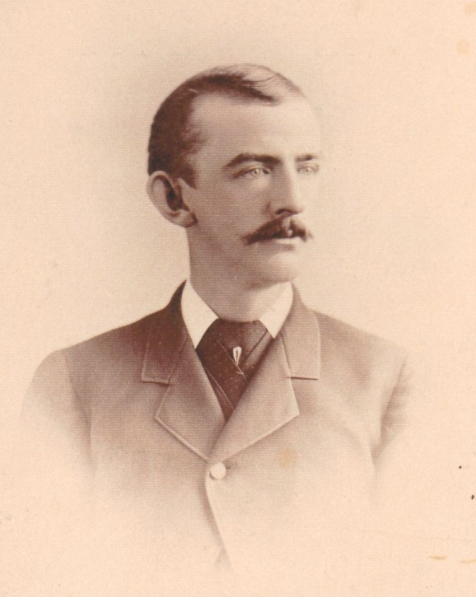
Winthrop Murray Crane, then a young member of the Crane family, closely tracked the competing bids. Realizing that Crane needed to adjust its pricing to remain competitive, he acted quickly. The story goes that rival bidders attempted to delay him, even going so far as to lock him in his room. He reportedly escaped through a window above the door, made his way back to the Treasury, and submitted a revised bid just in time to undercut the competition and secure the contract.
Whether slightly embellished or not, the story captures something essential. Crane’s success has often depended on a combination of technical expertise and determination.
Standing on the production floor today, it is easy to see why a relationship begun in 1879 still endures. Precision is everywhere. Processes are tightly controlled, yet continuously refined. The mindset remains familiar – getting it right, and relentlessly pursuing better quality, less waste, more value.
“In many ways, our role hasn’t changed in 225 years. What has changed is the complexity of the challenges we help our customers address, and the speed at which those challenges evolve.”
Sam Keayes
President of Crane Currency
A GLOBAL SYSTEM OF EXPERTISE
Crane’s story, however, is not confined to Massachusetts. It is also a story of expansion and integration. In Sweden, just outside Stockholm, the historic Tumba Bruk paper mill traces its origins to 1755. For centuries, it has played a central role in the production of banknote paper. Since becoming part of Crane in 2002, Tumba has added both heritage and advanced capabilities to the company’s global footprint.

In Tumba, as in Dalton, history and modernity coexist. Traditional expertise in papermaking meets advanced production techniques, contributing to a broader system of banknote production and issuance that spans continents.
That system now includes several facilities in the United States and Europe. Paper manufacturing in Dalton and Tumba form its foundation. Modern, state-of-the-art printing operations in Ħal Far, Malta, add another critical layer, while sites in Nashua, New Hampshire, and Alpharetta, Georgia, contribute specialized capabilities in advanced security features and technology development. Together, they are a model of modern banknote design and production.
Crane Currency today is active across the full value chain of banknote production. From design and concept development to paper manufacturing, printing, and advanced security features such as Crane micro-optics, the company integrates multiple disciplines into a single offering. The result are banknotes that are secure, durable and beautiful.
“Currency is evolving, but trust remains physical,” Sam Keayes notes. “It must be seen, felt, and verified. People need to know that what they hold in their hands is authentic, secure, and resilient. The confidence created by this is no accident.”


CONTINUITY IN A CHANGING WORLD
Crane has navigated industrialization, economic crises, global conflicts, and technological disruption. Each period has brought uncertainty, but also opportunity. The ability to adapt has depended on innovation, as well as consistency in quality, relationships, and purpose. The milestone of 225 years will not pass unnoticed. Throughout 2026, Crane Currency plans to mark the anniversary with events across its global locations, bringing together employees, partners, and customers. The materials have changed, the technologies have advanced, and the global context has become more complex. Yet the central question of trust remains remarkably similar to the one that defined Crane’s early years.