Banknotes Insights
Continuous Improvement Under Pressure: House Note No. 4
House notes allow banknote printers to test new security features, substrates, and design concepts outside the constraints of circulating currency. At the latest Security Designers Forum in Istanbul, Listi Nuraeni and Nur Supriyadi of Perum Peruri described how developing House Note No. 4 became an exercise in innovation under pressure – and why the lessons from that process will remain valuable long after the trial.
“We’re very busy,” said Listi Nuraeni, Assistant Manager at Perum Peruri, Indonesia’s state-owned printer of banknotes and security documents. Peruri supplies Bank Indonesia with the country’s currency, the rupiah – a responsibility that in a typical year entails producing and delivering several billion banknotes. Peruri is always busy, but this year, that description is an understatement.
Across the currency industry, companies are responding to historically high demand for banknotes. Peruri is no exception. Its challenge is not only to meet the needs of the nation’s central bank, but also to find the time and materials required to build expertise and evaluate new substrates and security features.
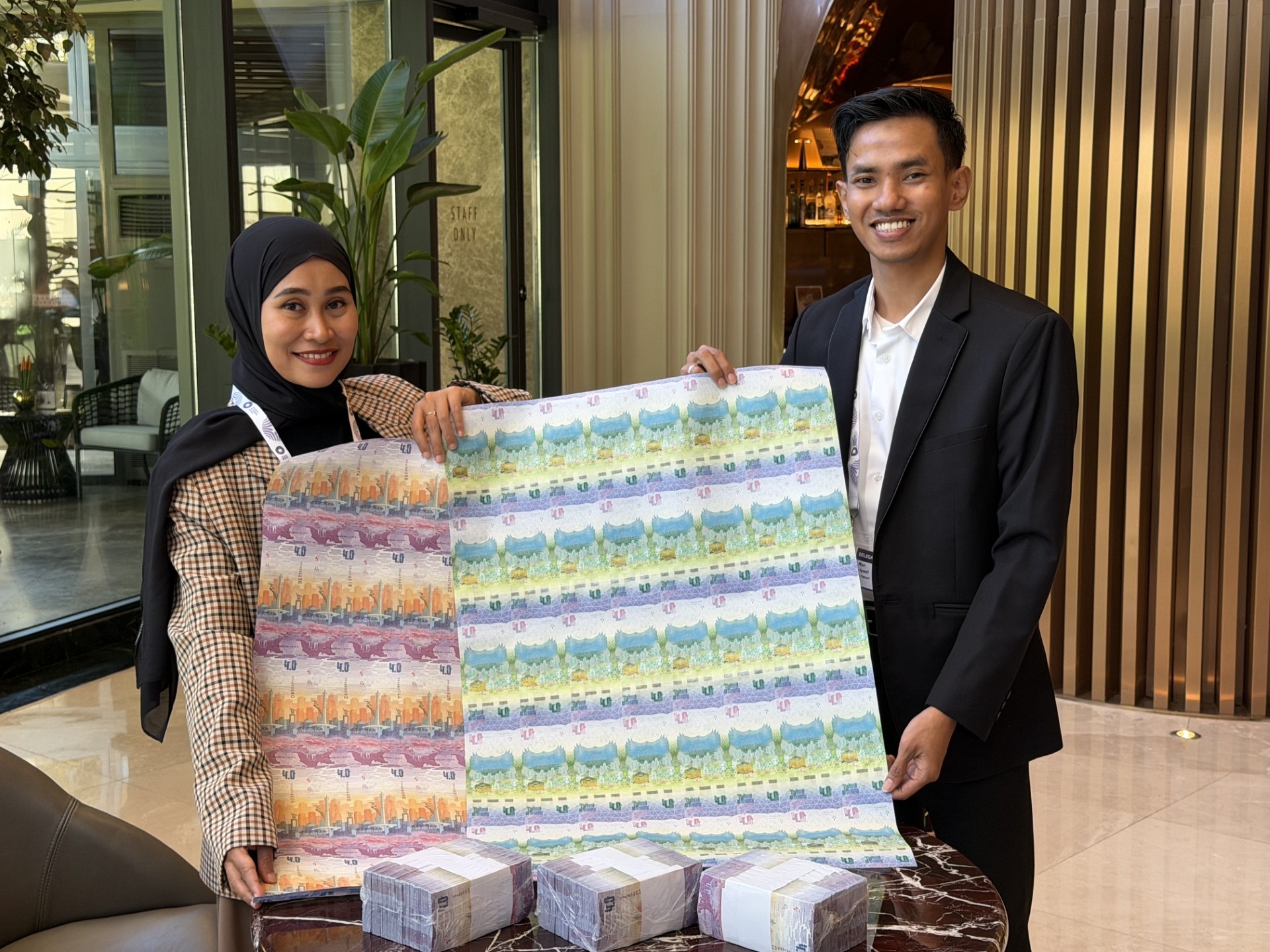
That pursuit brought Listi Nuraeni, Supervisor, and Nur Supriyadi, Senior Security Product Manager, to the Security Designers Forum (SDF) – along with Peruri’s latest test note, House Note No. 4.
A Continuing Program of Experimentation
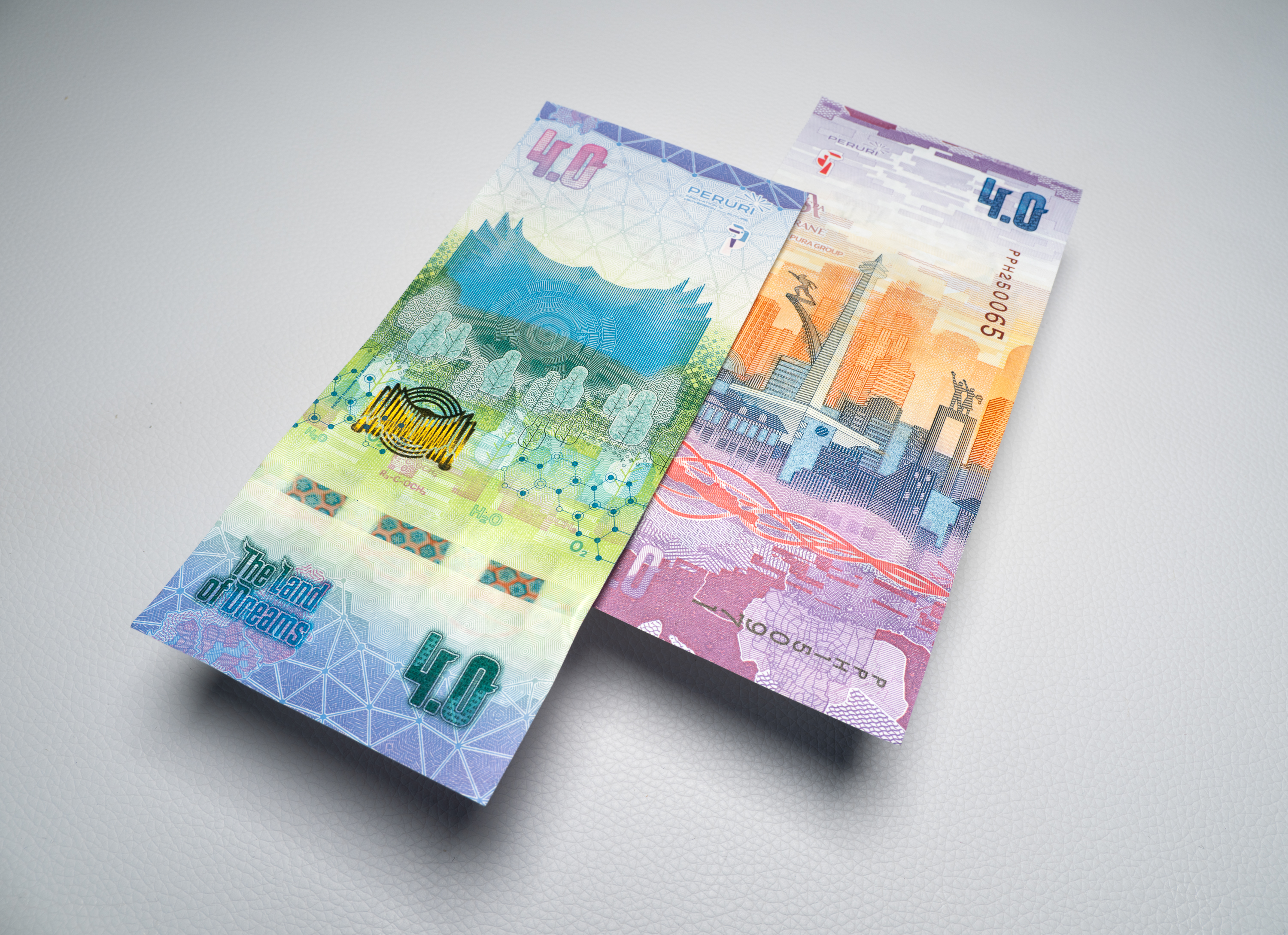
“No. 4 is the fourth house note we have produced to evaluate new features and substrates,” Nur explained. “No. 1, produced in 2015, was used to evaluate the RAPID® security thread. No. 2 evaluated a micro-mirror security thread in 100% cotton paper, and No. 3 was printed on Durasafe® substrate. Our primary goal with House Note No. 4 was to evaluate the RAPID® Vision security thread. At the same time, each note has given our teams new opportunities to experiment and develop their expertise.”
House note design and production were central topics at the SDF. House notes can help introduce new features to central banks, but they are also proving invaluable to the designers and production managers who must learn how to integrate those features effectively.
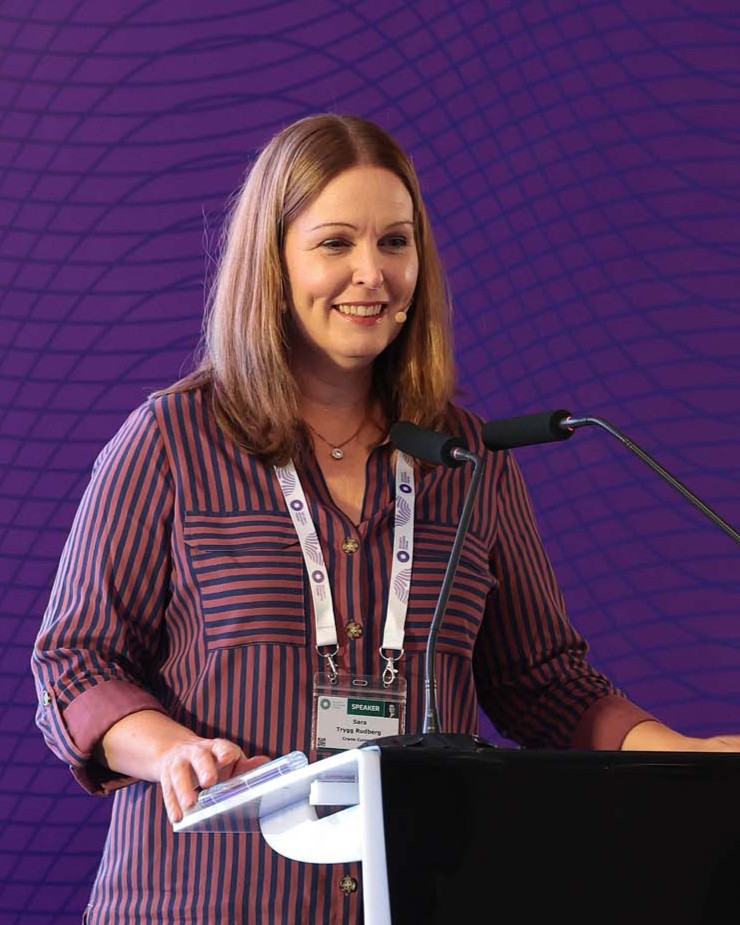
“We have produced a house note approximately every 24 months since 2002,” noted Sara Trygg-Rudberg, Crane Currency Banknote Design Manager.
At the SDF, Sara spoke about maintaining quality and security during crises and emphasized the value of producing house notes regularly.
“They can be costly in terms of both the time and materials required, but they provide unparalleled design experience. That experience is becoming increasingly important to achieving the level of technology integration that modern banknotes require,” Sara said.
Listi and Nur are accustomed to balancing urgent and competing priorities. Planning for House Note No. 4 began nearly two years ago.
“Alongside the day-to-day work of producing the nation’s currency, we must continue investing in our people and in their ability to work with new features,” Nur said.
Making Three Reams Count
Peruri invited Crane to supply RAPID Vision security thread and collaborate on the house note’s design, particularly the integration of the thread into the printed design. The collaboration began in 2025, but high demand for rupiah banknotes left no time for a trial run. Then another problem emerged.
“We had planned to use twenty reams of paper for the trial. Unfortunately, our supplier delivered only three,” Listi said.
That shortfall could have stopped the trial. Instead, Peruri’s cross-functional teams drew on their experience and worked closely together to continue with the exercise.
“Strong communication and coordination allowed us to make use of every sheet of paper and ultimately meet the trial’s minimum objectives,” Nur said.
The performance of the RAPID Vision thread also contributed to the trial’s success. Listi described it as “amazing.”
Lessons Shared at SDF
Production yielded enough house notes for both follow-up evaluation and distribution to participants at the SDF.
Listi also saw clear parallels between Peruri’s experience and several themes discussed at the forum. Presentations by Crane, Central Bank of Turkey, Banco de México, and SICPA explored designing during crises, continuous improvement through house notes, feature evaluation and selection, advanced offset and intaglio printing, and perception testing.
“We saw many of the most important points discussed at SDF reflected in our work and in House Note No. 4,” she said.
House Note No. 4 gave Peruri a practical way to evaluate RAPID® Vision while bringing its design and production teams together for a demanding trial. More broadly, the project demonstrated why regular house note programs matter – they build the experience and judgment required to integrate new technologies into future banknotes, even when day-to-day production leaves little room for experimentation.