Insights
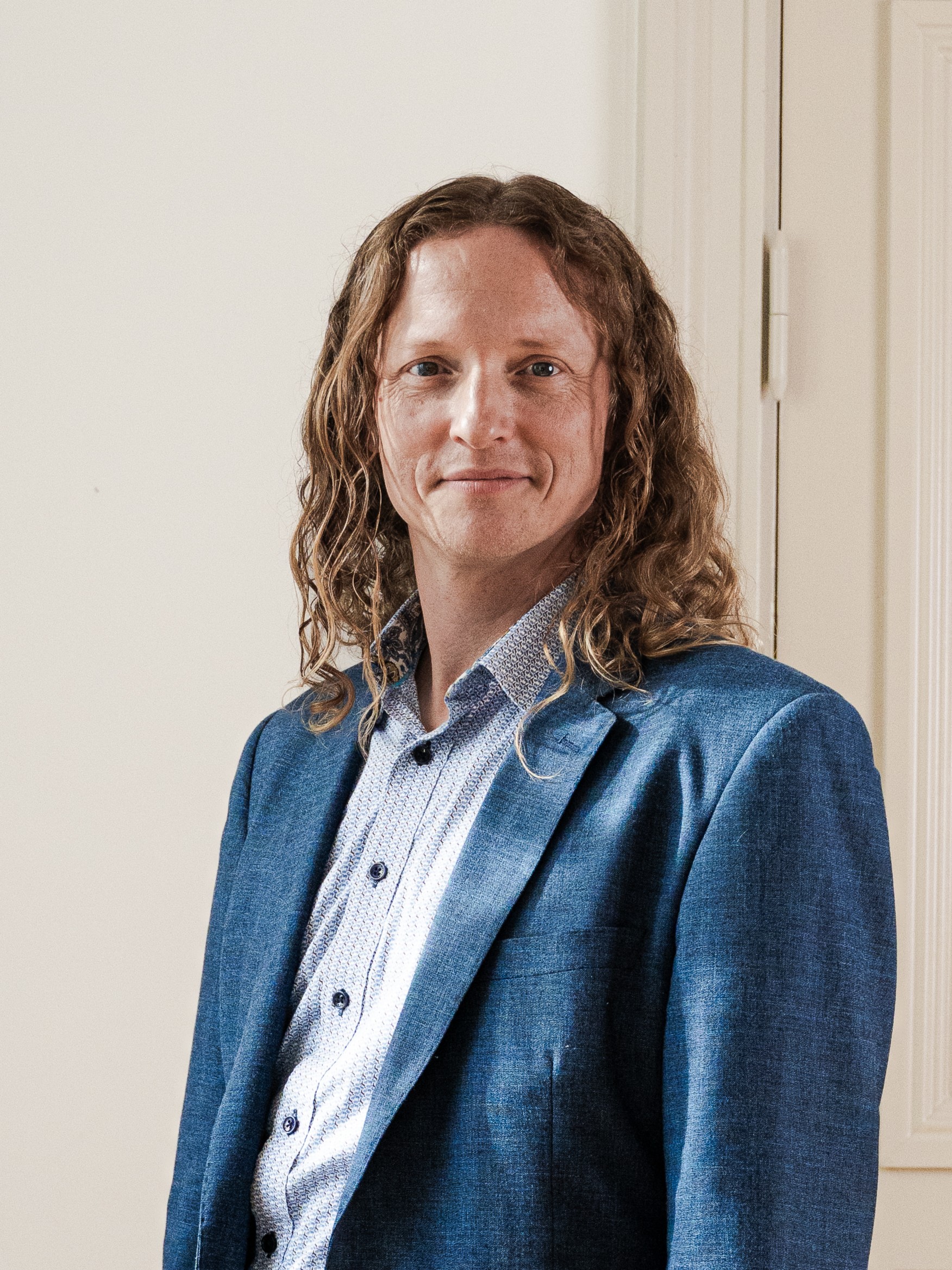
Sam Cape – the Innovator and Technical Designer
Math, Music and Micro-Optics
In Crane Currency’s R&D facility in Alpharetta, Georgia, the hum of equipment blends with something less expected–the quiet concentration of a man who prefers working the depth of details rather than at the altitude of boardrooms. Sam Cape, now Director of Innovation and Technical Design, moves between his desk and the lab with the same steady purpose he has carried since his earliest days in engineering.
“If you’re only riding around the boardroom, you can’t see the details of the work,” he says. It is not a slogan. It is a worldview.
Sam’s approach to innovation – patient, precise, and structured – has shaped some of the most significant advances in micro‑optic security in the past decade. But the origins of that mindset lie far from modern banknote technology.
Early Curiosity – A Student Who Needed to Understand
The story begins in a ninth‑grade trigonometry class. The teacher demonstrated how to calculate the cosine of 67 degrees by consulting a printed table in the back of the textbook. For most students, it was a convenient shortcut.
For Sam, it was unacceptable.
“A part of me just has to understand things,” he recalls. The idea of relying on a lookup table rather than understanding the underlying mechanics bothered him enough that he took home a college‑level calculus book and worked his way through it over the summer.
That instinct – to go deeper, to understand the underlying structure has followed him ever since.
Music as Mathematics Made Audible
In parallel with mathematics came music. Not as an escape, but as another form of pattern analysis. Guitar became his instrument, but what drew him in was not showmanship. It was structure.
“Music is vibration, frequency, patterns and rhythm. It’s very mathematical,” he says.
During college Sam played in five bands, performing almost nightly. Heavy metal, far from being chaotic noise, appealed to him because of its technical precision, speed and complexity. He studied electrical and computer engineering by day and played intricate, high‑energy guitar lines by night.
He cites players like Steve Vai and Frank Zappa as early influences – musicians who treated the guitar as a tool for pushing boundaries of harmony, structure and expression. Their creative work demanded both discipline and curiosity, two qualities that would eventually define Sam’s work in micro‑optics.

Engineering as Another Instrument
When Sam pursued electrical and computer engineering, it was not a shift away from music but an extension of it. Radio frequency theory, signal processing and advanced mathematics offered new ways to understand patterns.
At Georgia Tech, he arrived for freshman orientation and recognized himself and the rest of the band on the front page of the school newspaper, photographed during a performance earlier that summer. The coincidence reinforced a sense of alignment, that he was in the right place for both music and engineering.
These dual paths– artistic sensitivity to pattern and scientific discipline in understanding it –became a foundation for his later work.
When Sam joined Crane Currency, he found himself in an environment well suited to his style of thinking. Early work in the Alpharetta lab involved hands‑on experimentation with micro‑optic materials, light sources and improvised setups. The atmosphere was a cross between high-tech engineering laboratory and garage startup.
This was where he began keeping odd samples – anomalies that caught his eye, effects that didn’t fit expectations, pieces that might matter later even if they didn’t make sense at the time.
Choosing Depth Over Title – The R&D Fellow Years
At one point Sam was a director with a broad set of responsibilities – management, travel, meetings. But the further he moved from hands‑on work, the more distant he felt from what mattered most.
 “I’d rather make the pudding than write the recipe,” he says with a dry, understated amusement.
So, he made an unusual choice to step out of management and into an individual contributor role as an R&D Fellow. The shift allowed him to focus deeply on advancing the technologies that would later become the backbone of Crane’s next generation of micro‑optics.
During this period, he developed some of the defining techniques that would later form the internal framework for new projects. It was also a period of technical risk‑taking, persistent iteration and patient, foundational thinking.
As techniques matured, Sam took on a role that was partly technical and partly linguistic. Complex optical phenomena required new vocabulary. Designers needed reconciliation between artistic goals and engineering constraints. Customers needed explanations of effects that were difficult to describe but easy to see.
Returning to Leadership
In January 2025 Sam returned to a director role – this time as Director of Innovation and Technical Design.
The conditions are different. Today, Sam leads a smaller team, and the responsibilities are focused on innovation. Sam guides the continued development of Crane’s proprietary design software GDM, supports new generations of micro‑optic effects and thinks about what the next major advance will require, something he enjoys doing while roaming freely between the virtual world of software and hands-on, lab‑based experimentation.
He hints occasionally at new astounding ideas, though he offers no details.
“Innovation in micro-optics isn’t a string of dramatic breakthroughs. It’s a disciplined continuum – one that will reach more people in more ways, including far beyond modern banknotes.”