Insights
Diogenes on Banknotes – An Ancient Skeptic Sees Past the Shine
To mark Crane Currency’s 225th anniversary, we used artificial intelligence to imagine a conversation with Diogenes of Sinope—the ancient philosopher known for challenging convention, exposing pretension and looking beyond appearances.
His perspective is well suited to an industry filled with impressive claims and eye-catching technologies. Diogenes would ask one simple question: Does it actually work?
Crane Currency Marketing Director Tod Niedeck invited him to consider four trends shaping the future of banknote security.
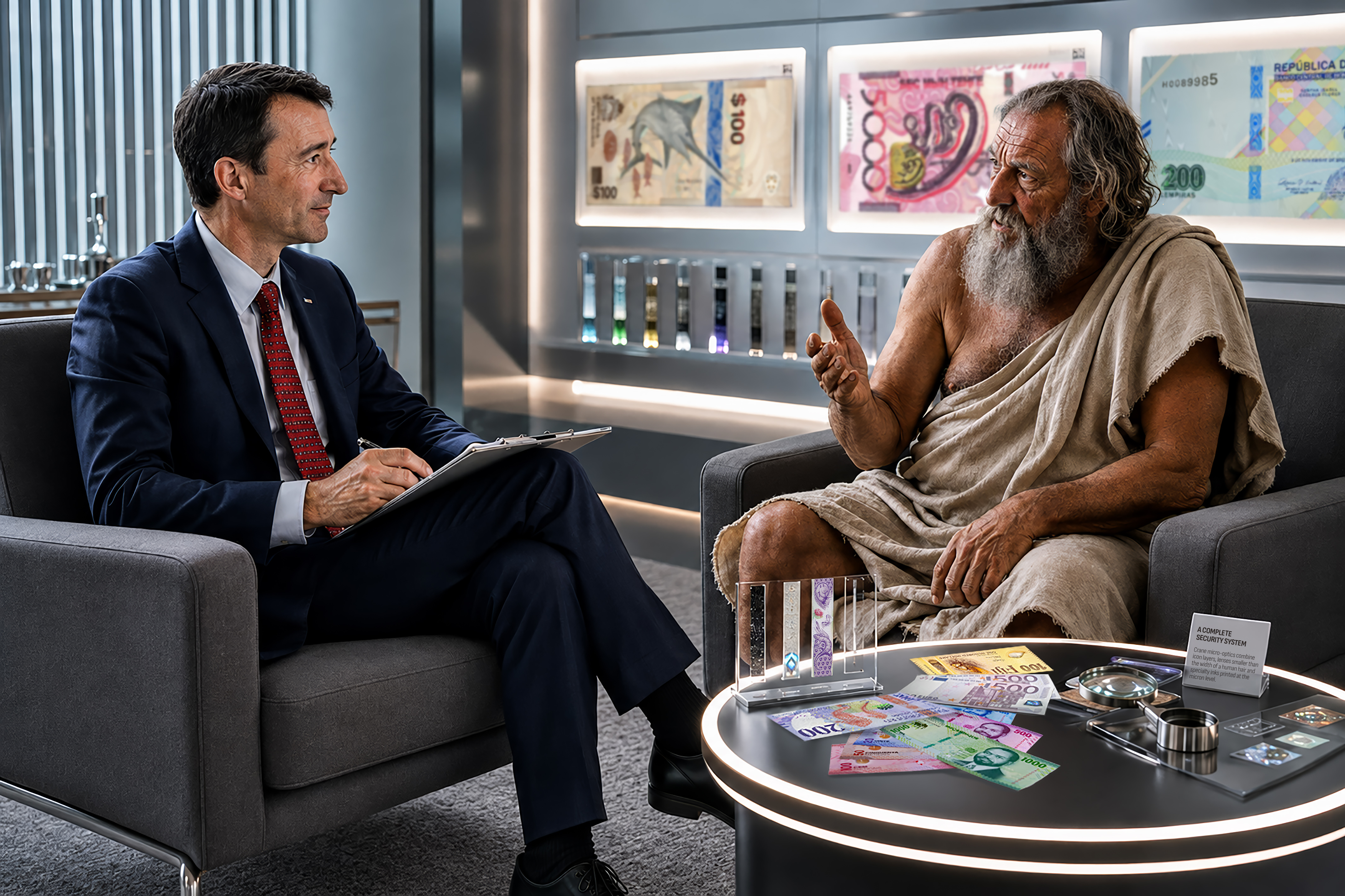
Crane Currency (CC): Welcome, Diogenes. You rejected wealth, status and power—and became famous for doing so. When Alexander the Great interrupted your sunbathing by offering to grant you a wish, you reportedly told him to stop blocking your sunlight.
Diogenes (DG): Well, he offered me everything except the thing I wanted.
CC: You were known for questioning appearances. Is that approach still useful?
DG: More useful than ever. Today, the clay jar I called home would probably be marketed as a “cozy, sustainable micro-residence in central Athens.” The jar is the same. Only the description has become more elaborate.
CC: Does that apply to banknotes?
DG: Naturally. Every age has impressive language. The danger is confusing appearance with substance.
CC: What advice would you give central banks assessing new security technologies?
DG: I appreciate the irony of receiving that question from a Marketing Director. Still, I can offer four trends that deserve serious attention.
Trend No. 1 – Evidence Is Replacing Assumption
DG: Every supplier will say that its security features are secure and effective. The more important question is whether those claims can be demonstrated.
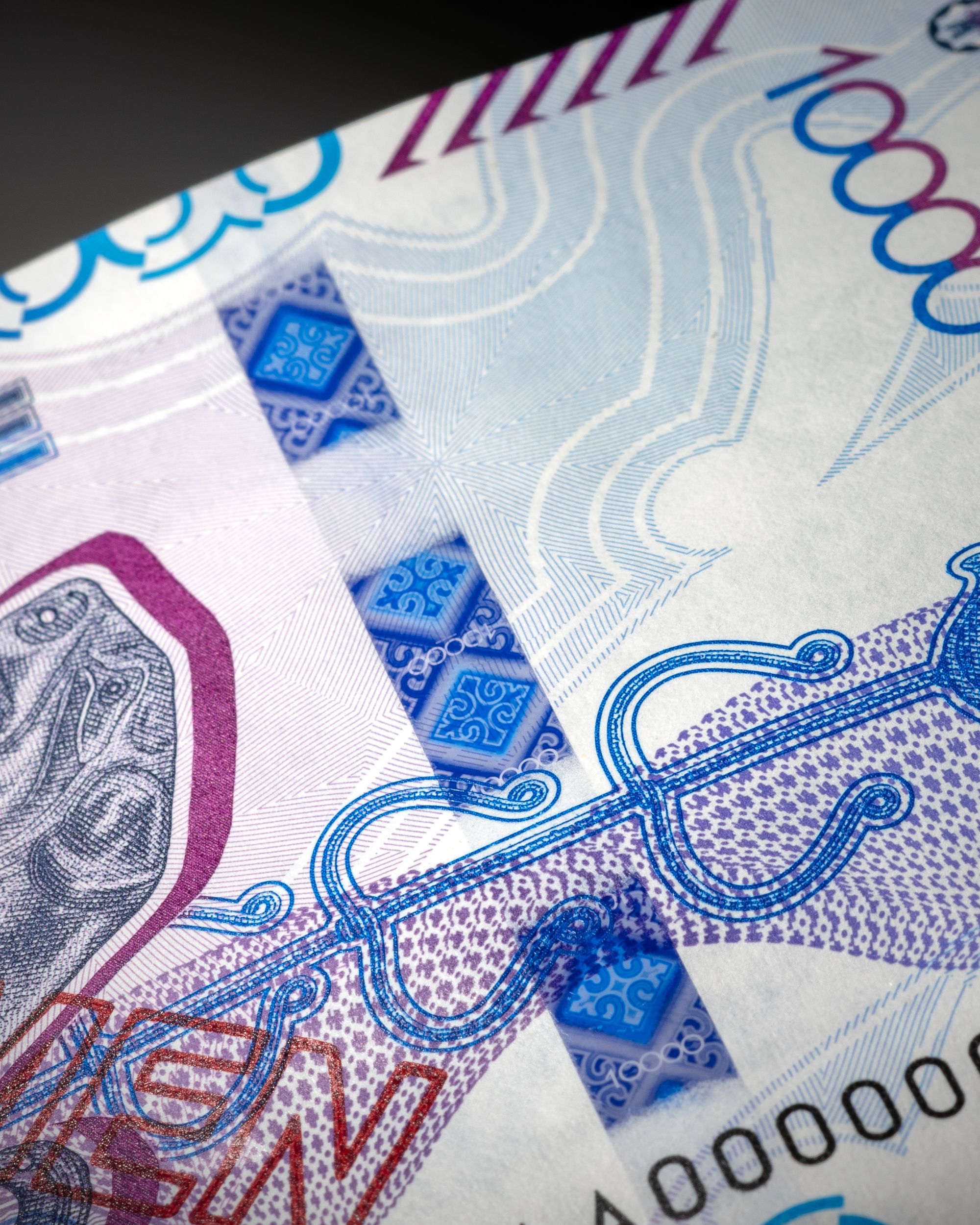
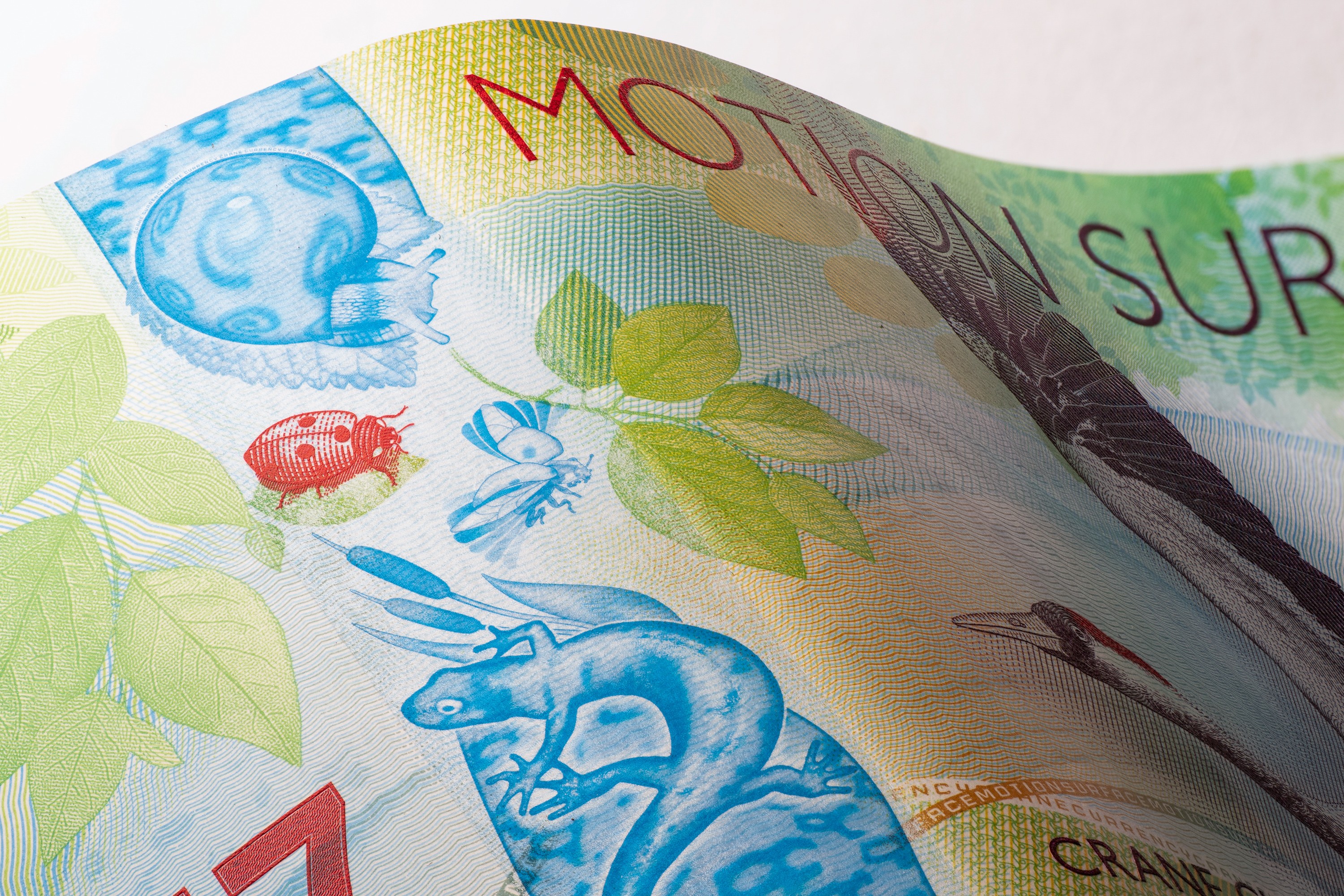
Crane Currency has been an early and sustained investor in independent public-perception studies examining how people interact with security features such as MOTION SURFACE®, RAPID® and RAPID® Vision.
These studies support a broader evaluation process for understanding both value and risk. They also reflect an important shift in the industry: feature decisions are increasingly being supported by evidence rather than appearance or supplier assertion alone.
Crane has helped advance this approach by sharing its research and evaluation methodology with central banks.
CC: So attention is not authentication?
DG: Correct. A feature that attracts attention addresses only part of the authentication process. The real test is whether the public can quickly and reliably distinguish a genuine feature from an imitation.
That requires two things. First, the genuine feature must be easy to find, understand and authenticate. Second, a counterfeit imitation must be difficult to produce convincingly.
Together, ease of use and counterfeit resilience determine the security value of a public feature.
CC: But visibility still matters.
DG: Certainly. A feature that no one notices won’t be used. But visibility alone should not create a false sense of security.
Counterfeiters understand that people make payment decisions quickly. They may not need to reproduce the genuine technology if they can create a superficial imitation that looks credible at a glance.
That is why public research should include realistic simulations rather than evaluating only the genuine feature.
CC: How can central banks know what the public is actually checking?
DG: Look at the features counterfeiters choose to simulate. Where counterfeiters invest effort is where they believe public attention is concentrated.
CC: What about technically sophisticated features?
DG: Sophistication alone is not security. A micro-optic feature may be difficult to manufacture, but if its movement has low contrast, low brightness or is difficult to understand, the public may struggle to authenticate it or simply ignore it.
The right question is not simply, “How advanced is the technology?” It is: “How well does it work for the public, and how difficult is it to imitate convincingly?”
Trend No. 2 – Design Integration Is Becoming a Security Discipline
DG: “Public First” thinking is compelling central banks to examine how effectively security features work for the public in ‘real world’ conditions.
At the same time, a modern banknote must combine national imagery, public authentication, machine readability, and durability to be printed efficiently as tens or hundreds of millions of banknotes. That is why design integration is increasingly becoming a security discipline in its own right.
CC: So is Design Integration Driven by Security or Productivity?
DG: Both. In terms of security, some older banknote designs with visually dominant security features were only loosely connected to the surrounding print. That could allow counterfeiters to add feature imitations to otherwise poor reproductions and still create quite deceptive counterfeits.
Strong integration changes that relationship. The security feature becomes part of the banknote’s visual language and authentication process rather than an isolated element.
Integration can also help address feature harvesting, where an authentic security element is removed from a genuine banknote and transferred to a counterfeit.
So design integration goes far beyond production efficiency. It connects feature technology, visual design, materials, application with production efficiency.
CC: How does Crane Currency approach this?
DG: This is where Crane has established a distinctive capability.
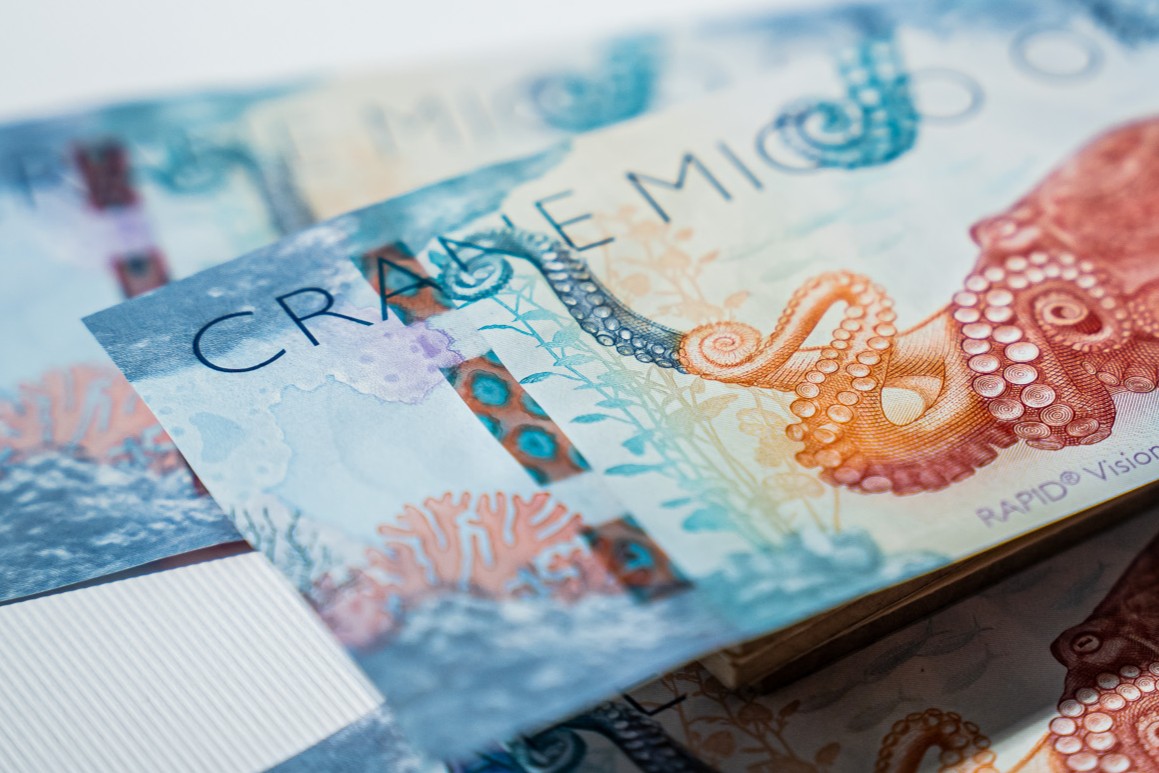
Security features such as RAPID, MOTION and MOTION SURFACE are fully customized using Crane’s proprietary micro-optic design software. The customer’s banknote design is placed at the center of a three-stage integration process.
Conceptual integration asks what the public should see, what effect they should recognize and how the feature should support the banknote’s narrative and authentication logic.
Detailed integration connects imagery, movement and optical effects within the feature to the visual language of the note.
Technical integration ensures that the concept performs reliably in production and circulation, including printing processes, substrates, adhesives, application and tolerances.
CC: So Crane’s strength is not only the feature itself?
DG: Exactly. There is a meaningful advantage in combining micro-optic technology, collaborative customization, banknote design expertise and production experience within one organization.
Crane’s strength is not simply the ability to create an advanced feature. It is the ability to understand how that feature should be designed, integrated and industrialized as part of the complete banknote.
The goal is to make technical complexity feel simple and intuitive to the public.
Trend No. 3 – Movement and Three-Dimensionality Will Remain Essential
DG: Movement and three-dimensionality are defining characteristics of effective public security features and will remain important for the foreseeable future.
They work because people respond naturally to movement, depth and changes in perspective. When these effects are bright, clear and well designed, authentication moves closer to being intuitive.
CC: More movement-based features are entering the market. Is that positive?
DG: Competition and innovation are healthy. But technologies described in similar terms do not necessarily deliver the same performance.
Features can differ significantly in brightness, contrast, viewing angle, clarity of movement, three-dimensionality, customization and resistance to simulation.
Central banks should therefore evaluate the actual effect rather than the category name.
Ask whether people can find it. Ask whether they understand what they are supposed to see. Ask whether they can authenticate it quickly. And ask whether and how convincing simulations can be produced.

Trend No. 4 – Disaggregated Supply for Better Value and Resilience
DG: Excuse the fancy word: disaggregated.
It describes a move away from the traditional model in which a central bank relies heavily on a single supplier, toward an environment in which specialist providers contribute different technologies and capabilities to the final banknote.
A central bank might select customized features from one or more suppliers while another organization prints the finished banknotes.
This requires more evaluation, coordination and design integration—but it can also provide greater choice, access to specialized technologies and a more resilient supply chain.
CC: So should central banks actively look for alternatives?
DG: They should remain informed about credible options.
New technologies deserve careful evaluation. Independent research, technical qualification, and rigorous assessment allow central banks to understand performance before becoming operationally important.
That signals good security practice, not dissatisfaction with an existing supplier.
CC: Does Crane have a particular role in a more open supply model?
DG: Yes, because Crane operates from an unusually broad base of experience.
It is both an advanced security-technology provider and an experienced banknote manufacturer. That means it understands not only how a feature is designed, but also what must happen when that feature reaches the substrate, printing press, processing environment and ultimately circulation.
This combination is particularly valuable in a disaggregated supply chain.
A specialist technology provider must be able to collaborate with other organizations and integrate its technology successfully into a banknote that may be produced elsewhere.
Crane’s ability to customize micro-optic features, integrate them into banknote design and understand production requirements makes it well positioned to support this model.
CC: Any advice for central banks that feel well served by a single supplier?
DG: If the relationship works well, there is no reason to change simply for the sake of change.
But responding to a security threat, introducing a feature or developing a new banknote series can take years. It is therefore sensible to understand and qualify alternatives before they are urgently required.
CC: Thanks, Diogenes. So the four trends are evidence-based evaluation, deeper design integration, movement and three-dimensionality, and more resilient supply models.
Any final thoughts after 2,500 years of reflection?
DG: Only that your industry seems very fond of conferences, competitions and awards.
I recently read that a banknote with an “unchanged design” had won an award as the best new banknote. Such accolades remind me of a lecture by Plato in which a featherless biped turned out to be not a man, but a plucked chicken.
CC: A suitably skeptical observation. Shall we find something to eat?
DG: Good idea. Preferably somewhere with sunlight.
CC: And chicken?
